
When a Hospital is Miles Away and Rights Are Stripped
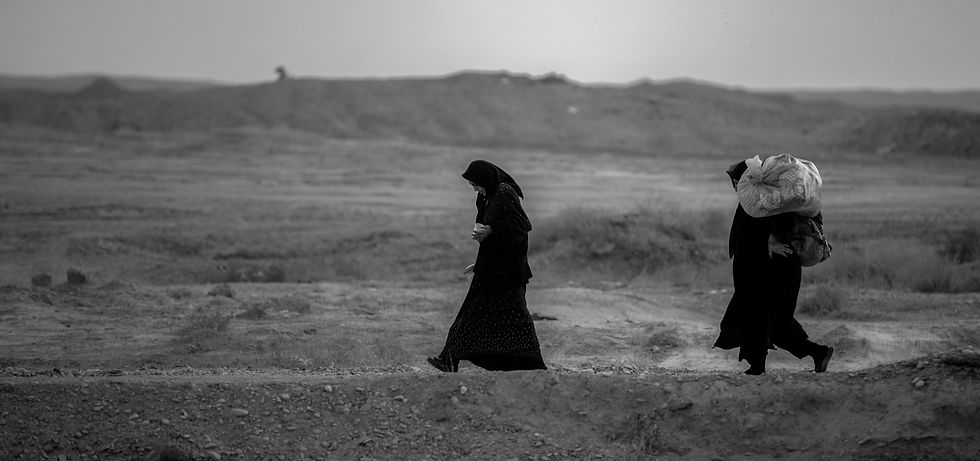
Photo: Mostafa Meraji/Unsplash
August 5, 2026 by Gabriela Villar Roman
Before a baby takes its first breath in Afghanistan, their mother’s life is already at risk. Today, the miracle of birth has turned into a major emergency. Between 1996 and 2001, strict Taliban rules left 75% of regions without maternal care, resulting in record-high maternal death rates by 2001. While healthcare improved over the following two decades, maternal health has severely declined again. Since the Taliban returned to power in August 2021, foreign development aid, which previously funded nearly 75% of public healthcare costs, has stopped flowing. This sudden loss of funding has left clinics without basic supplies like blood bags, oxytocin to stop bleeding, or working power. Rural areas suffer the most, and harsh rules on women’s rights make safe childbirth nearly impossible.
For rural Afghan women, getting medical care requires overcoming massive geographic and financial obstacles. Big cities like Kabul, Herat, and Nangarhar have more clinics and trained nurses. In contrast, remote northern and central provinces like Badakhshan, Ghor, and Daikundi face extreme shortages. Pregnant women experiencing life-threatening emergencies often live hours or days away from the nearest clinic. They must walk long distances over rough mountain roads or hire private vehicles. The cost of private transport often exceeds a household's entire monthly income. Today, only 14% of births in Afghanistan involve a trained doctor or midwife, and 1 out of every 14 Afghan women dies during pregnancy or childbirth. During labor, every minute without a trained nurse or hospital room increases the risk of severe bleeding and infection. Distance alone acts as a major cause of death.
On top of long travel and poor facilities, strict rules require women to travel with a male family chaperone (a mahram). A pregnant woman experiencing severe bleeding cannot simply leave for a clinic on her own if a male relative is at work, absent, or unavailable. Furthermore, the ban on girls attending school after sixth grade, along with restrictions on female university and medical training, is cutting off future generations of healthcare workers. Because local culture requires female patients to be treated only by female doctors and midwives, banning girls from school guarantees that future clinics will have no staff. Without female nurses to treat them and without freedom of movement to travel, rural women are cut off from basic healthcare. No woman should have to risk her life simply to give birth.

Photo: Joel Heard/Unsplash
Behind these statistics are real people suffering every day. In rural Afghanistan, a woman dies during childbirth every two hours. Sita, married at just 12 years old, faced these risks firsthand. She lost her first pregnancy due to severe malnutrition. During her second pregnancy, she went into sudden labor at 28 weeks. Luckily, a local clinic midwife safely delivered her weak baby, revived the infant, and provided nutrition packages so her daughter, Forozan, could survive. In another case at Nangarhar maternity hospital, a mother named Rabia gave birth in pitch darkness. The hospital had lost city power, and the backup generators ran out of fuel. Midwives had to deliver her baby using only the light from a mobile phone, with no pain medication, food, or clean water. These stories show that maternal deaths during crises are preventable when local health centers receive direct funding, basic supplies, and generator fuel.
Decades of war, poverty, and broken clinics threaten millions of lives every day. Local midwives work endlessly with few resources, but they cannot keep the health system running alone. Protecting Afghan mothers requires more than sympathy; it demands direct action from the international community. First, donors must send funding directly to local health networks and international non-governmental organizations (NGOs) operating on the ground to bypass political delays. Second, aid programs should fund off-grid solar energy systems for rural clinics and provincial maternity wards so doctors never have to deliver babies in the dark. Finally, global leaders must make non-humanitarian support strictly conditional on restoring women's rights to receive medical education and work in healthcare. Without continuous international support, many more Afghan mothers and children will die from causes that are easy to prevent. Every minute a mother bleeds out in the dark is a stolen future the international community has failed to prevent.
Works Cited
Hamdam, Parwana, et al. "Maternal Health under the Taliban in Afghanistan: Current Status and Challenges." BMC Pregnancy and Childbirth, vol. 25, no. 1, 2025, p. 1293. doi.org/10.1186/s12884-025-08458-3.
Maajid, Mudabbir, Kristina Jovanovska, and Hillol Sobhan. "Afghanistan Maternal Health Crisis: How CARE Clinics Save Young Mothers in Remote Villages." CARE, 4 Feb. 2026, www.care.org/news-and-stories/afghanistan-maternal-health-crisis/.
Solidarity Committee. "Afghanistan's Maternal and Child Health at Breaking Point." Solidarity Committee Policy Brief Series, 5 May 2026, solidaritycommittee.org/afghanistans-maternal-and-child-health-at-breaking-point/.
Tharwani, Zoaib Habib, et al. "Maternal Mortality in Afghanistan: Challenges, Efforts, and Recommendations." Clinical Epidemiology and Global Health, vol. 15, no. 101038, 2022, p. 101038. doi.org/10.1016/j.cegh.2022.101038.
UN Women. "FAQs: Women’s Rights in Afghanistan." UN Women, 2026, www.unwomen.org/en/articles/faqs/faqs-afghanistan.


Comments